
Top Tips for Planning an International Trip
You Did It—You Booked That International Trip! Now What?
You booked that international trip you’ve been dreaming of. Now that the flights are confirmed… how do you start planning the rest? It’s easy to feel overwhelmed when you’re trying to figure out lodging, transportation, money, and how not to look like a confused tourist on day one.
Don’t worry…this quick-start guide walks you through all the essential steps to take after settling on taking an amazing international trip, especially if you’re new to traveling abroad. From practical logistics to saving money and staying connected, this checklist has you covered, so you can spend more time watching inspirational IG reels instead of worrying over planning!
Step 1: Choose the Right Lodging (and Location)
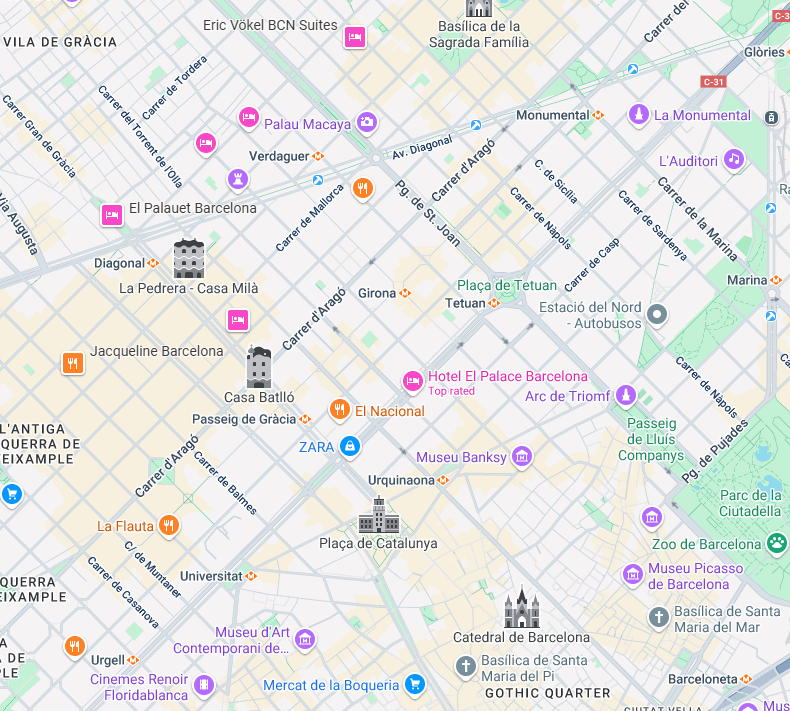
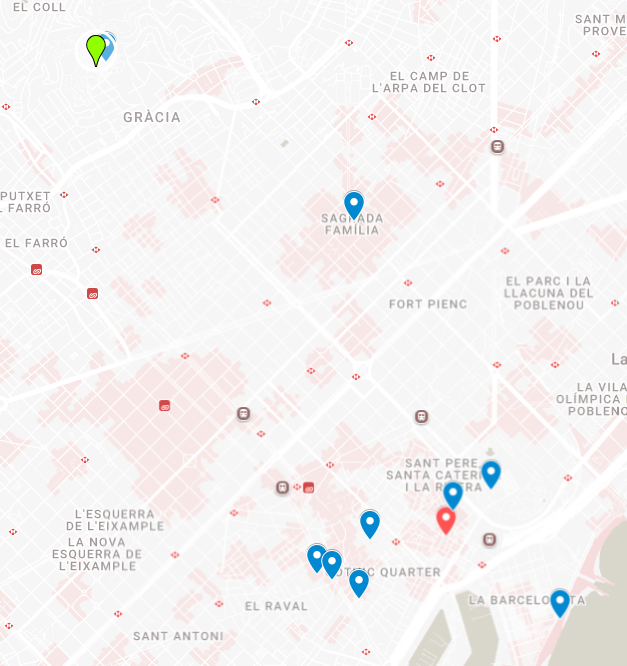
Location matters: Staying in walkable, historic areas often adds charm and convenience. But if you’re on a budget, staying just outside the city center can save you a lot – just check public transit options first. When I’m starting my search, I like to plot all of the places I want to go into Google maps to see where a good central location may be. (example below – red is our airbnb) Additionally, when looking at Google maps, always look for the yellowy colored areas. Those are normally the historic or central parts of the cities!
Airbnb vs. Hotel: Airbnbs can offer more space and local character, often in older neighborhoods. We often prefer Airbnbs if we are staying more than a few days, because it gives us more space and the ability to bring home groceries and cook if we wanted. Especially after a long flight, it’s good to have some extra space to spread out while we adjust our sleeping schedules. Hotels, on the other hand, may let you use credit card points, and have a helpful front desk + may seem ‘easier’ when entering a new city. Looking at both options is smart!
Double-check reviews: Look for recent reviews that mention noise, safety, and transportation. Researching ahead of time for a well reviewed lodging option will save you headache later. I also tend to read a lot about the best areas to stay in a certain city before booking, so I know where to center my search.
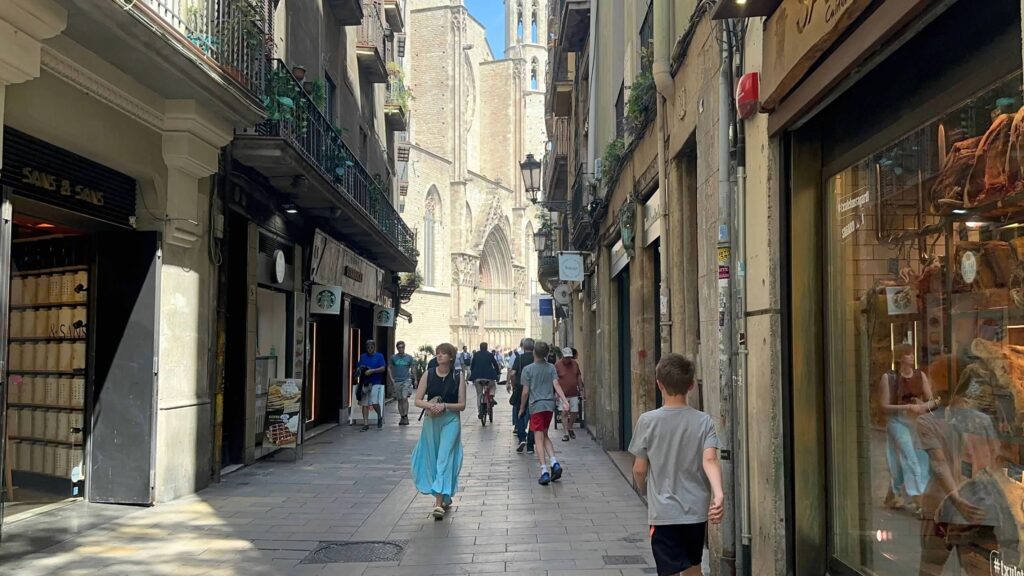
Travel inspiration: this Airbnb below was right in the center of Barcelona’s gothic quarter. It was walkable to everything we wanted to see, was right in the heart of the action, but was quiet at night.

Step 2: Sort Out Your Money & Cards
Research Where You’re Headed: It’s good to understand if you’re heading to a country that is very cash heavy or where credit is widely accepted. What is their local currency? Learn a bit more so you know what to expect.
Credit cards: It’s no secret that we prefer our credit cards. Not only do they earn us travel points which we convert for more trips… but they also are safer than carrying cash. We recommend to carry at least 2 just in case one gets blocked by your bank or a certain one isn’t accepted… and most importantly, make sure they have no international fees. Most countries will widely accept credit cards. Our favorite options are listed on our recommendations page.
Cash: Determine if you will need cash where you are going. If you are heading to a place that widely accepts credit cards and you may not need cash, I wouldn’t worry about getting any before you leave. If, however, you may need cash immediately for taxi or tips in a country that is cash heavy, you can exchange a small amount at your home bank ahead of time. We did this before we went to Turkey as we knew it’s possible we may need a bit of cash the first day. The rates at your local bank are likely not as good as if you get money from an ATM in the country when you arrive. (more on that in a minute…) Avoid exchanging at airport kiosks, where rates are high.
Debit cards: I never use debit cards for anything, except in one specific case… using them to withdraw money from an ATM in a foreign country. When we arrive in a new country, we use our debit card to take money out in the local currency. There are usually ATM’s at the airport. Very important tip though…Get one that has no foreign transaction or ATM fees. We like Charles Schwab. They offer a free account you can open online and will send you a debit card. There is no minimum balance and no fees. We keep the account empty most of the time except to move over enough money before a trip to withdraw at an ATM. When you withdraw, they wave all of the ATM fees! Make sure you move plenty of money over though, because the transfers can take a day or two.
Setup Your Phone for International Use
Check your current plan: Some U.S. carriers offer decent daily international rates; others are outrageously expensive. This is usually not the cheapest, but sometimes it’s the most convenient because your can send and receive calls and texts with your current phone number and no setup required. One thing to watch out for – you typically get charged per day and per country. If you have a quick layover in another country, better make sure you’re on WiFi so you don’t get charged again. Or, if you’re taking a train from one town in France to another and pass through the country of Monaco, make sure you’re not on your phone and get charged a 2nd time……… speaking from experience.
eSIMs: This is usually the cheapest options. There are lots of options out there as well, including Holafly, Airalo and Saily. This usually runs just a few dollars a day and comes (often) with unlimited data. The downside to this is that your current phone number for text and email won’t work. We found this out the hard way during a trip where we couldn’t contact anyone via our normal number. We could however use things like IG or Facebook messenger or WhatsApp. So, weigh the options 🙂 If you really want to disconnect from reality, an eSim may be great!
WhatsApp: Download it – many locals and tour operators use it to communicate!

Download Before You Go!
Offline Google Maps: I usually do this in scenarios where I think phone coverage may be spotty. You can download for a whole city or location so you always have an idea where you are if you’re stranded without phone coverage.
Google Translate: Download the local language for offline use, and learn how to use the camera/picture translate feature for menus and signs. It’s super handy to be able to read menus by just holding the the translate app up like you’re taking a picture and read everything! It’s saved us so many times!
Travel apps: Consider downloading apps for public transportation, rideshare, your airline, or any other specific app to that country (e.g. SBB app for Switzerland Transportation).

Transportation Planning
Public transportation: Learn how locals get around—metro, bus, tram, etc. Look up whether you need special cards or apps to ride. It’s also good to understand where the stops are and how you navigate. For non-Americans, this may seem easy… but for those of us who really haven’t had efficient public transportation systems, it can be a little tricky. I usually read lots of blogs and watch some videos about the place I’m traveling if I’ll need to use public transportation.
Rideshares: Uber isn’t everywhere. Some countries use Bolt, Grab, or local taxi apps – research what’s best.
Train travel: In countries like Switzerland, Italy or Spain, trains are often the best option. Book in advance to reserve seats and save money. I’ve used companies like Rome to Rio to reserve tickets, but you should also research what websites are the best for the specific country you’re visiting.
Rental cars: Only get one if needed. Most of the time, countries have really nice public transportation. But occasionally you may need to drive. Make sure you get an International Driving Permit (IDP) if required. Some countries won’t let you rent without one. We got ours at AAA. If you’re crossing borders, research restrictions for taking a car to another country.

Important Document Prep!
Make copies (physical and digital) of your passport and driver’s license. Store them in a separate bag or upload them to the cloud.
Bring a passport wallet or pouch to keep it protected and accessible when needed.
Check if you need a Visa or any other document to enter the country you’re visiting. Turkey for instance, we needed a Visa ahead of time.

Learn Some Basics
Learn a few key phrases in the local language (hello, thank you, where is…?).
Check local customs or laws (like tipping, greetings, and dress codes). In Turkey, I needed to cover my head when entering a mosque. In Portugal, tipping was very uncommon.
You will likely need a travel adapter to charge your electronics. Do yourself a favor and get the universal adaptor so you can use it in any country. If you’re in an Airbnb and may need to charge things in multiple rooms, get 2 of them like we did! Here is our favorite: Travel Gear
Bonus Tips:
Travel insurance: Consider getting coverage for delays, medical issues, or cancellations—it’s often worth the peace of mind. In fairness, we typically don’t get specific insurance, but do have some through our credit cards. Depending on where we are going, we may consider travel medical coverage.
Vaccines and meds: Check if any vaccines are recommended. Bring a small travel pharmacy (Ibuprofen, dramamine, meds for upset stomach, etc.).
Luggage tracking: If checking a bag… or even if not, consider adding an Apple AirTag just in case so you always know where your stuff is. AirTag Recommendation!
Final Thoughts
Planning your first international trip doesn’t have to be overwhelming. Use these tips to check off the critical items before you go, and you’ll feel much less stressed!
Now, get ready to start planning the fun stuff – like food and sightseeing!
Check our our recommendations page to see our favorite travel credit cards and gear!